(Not quite) walking in the air . . . on snowshoes!

Striding through the forest, three feet above ground level, with snow gently falling, the utter peace broken only by the crunch and slide of our movement and the occasional chirp of an early Chickadee; our first experience of snowshoes felt totally natural and easy, though we were told we kept up a cracking pace.

Then creating fire from nothing with a bow and drill to heat up picnic wraps (ambient temperature about -14C), before returning to a room  cosy with the warmth of a roaring wood-stove and dozing the afternoon away. What a magic way to spend a wintry Saturday!

Evergreen Forest Resort B&B – a great place to escape to!

It’s not what you think . . .

Today we became Canadian Citizens!

For those who may be unsure, this does not mean we have to renounce our British Citizenship. Dual citizenship blesses us with considerable freedom of movement in both Europe and North America, as well as consolidating our status here in Canada and giving us the right to vote (and hold office). There is also something important to me about embracing the full responsibilities of a citizen – we feel very fortunate to have this opportunity and would like to play our part in helping to make Canada the best it can be.

To honour the occasion, I thought I’d reflect on some of the misconceptions we have come across about Canada and Toronto!

  • Toronto is not ‘the far north’ – it lies way south of the UK, at the same latitude(43 42’N) as Nice and just south of Florence.
  • Average July temperatures are 3.3C higher than in London at 26.1C, though of course the winters genuinely are colder. Temperatures usually hover much of the time around -1 to -5C, though this year we have dipped on occasion to nearly -30C. But we get 2066 hours of bright sunshine on average a year compared with just less than 1500 in London. And that little bit of extra cold actually takes away some of the dampness.


  • Despite the recent glare of publicity on the less than savoury exploits of our mayor, Toronto is ranked the second most reputable city in the world, by the Reputation Institute, the world’s leading Reputation Management Consultancy.
  • As far as crime goes, Toronto’s rates are just slightly lower than London’s.


  • ‘Canada produces wine?!’ Yes, and much of it is very good! In Ontario, there are three notable wine areas; Niagara, Prince Edward County and the North Erie Shore. I am enjoying becoming increasingly knowledgeable about Ontario wine – it is fun to find winery tours so accessible. And, just for the record, in 2013, the Decanter World Wine Awards judged a wine from the Okanagan valley in British Columbia, Mission Hill’s Pinot Noir, as one of the World’s Best Wines! Echoing Napa Valley’s breakthrough moment, this could herald increasing interest in Canadian wines.

And on that note, it’s time to raise a glass to the country we have chosen to call home.

Cheers!


Citizenship celebrations – what a welcome!

I missed the first part of a work ‘cakeathon’ (a colleague’s birthday cake) today because we were at our Citizenship Ceremony, but contributed the second – it seemed only appropriate to order a celebratory ‘Canada’ cake! It was a special moment to cut this in the staff-room, with Bishop Poole (my boss), standing behind me.

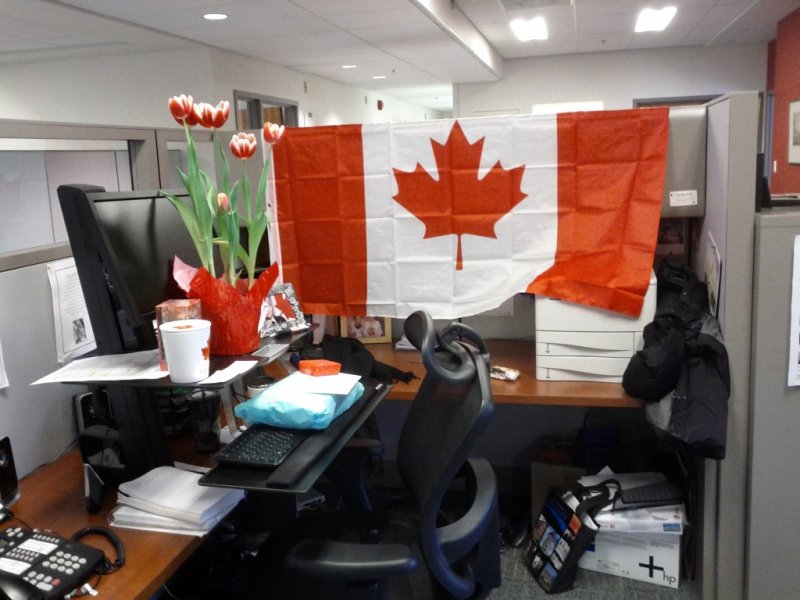
What I didn’t yet know was that, one floor up, my work area had been decked out with a flag and piled high with Canadian themed gifts; a red and white tulip, a mug, a pen, a special photo frame with the Prime Minister, just for the occasion, masking a lovely group photo of my colleagues taken at our summer BBQ, a towel embroidered with the flag and ‘Bearne’ (a gift from a priest friend), maple syrup, maple tea and maple filled chocolates, cards and a brooch made from copper that originally was used in the Parliament buildings in Ottawa . My Bishop reckons that if you can be over-whelmed, you should be able to be ‘whelmed’. He instructed  me that I was to be whelmed rather than overwhelmed!

What a wonderful welcome from my fellow Canadians, eh!


Wikwmikong Cultural Pow Wow 2013

Summer Reflections 3: Wikwemikong

The windows of the school are boarded up for the summer and the supermarket’s windows are also barred. Signs outside the village speak of zero tolerance for drugs. For some reason, I had expected that Wikwemikong, as Canada’s only unceded Indian Reserve, would  be among those First Nations Communities that seem to be embracing contemporary life most positively . The reality did not, at first glance, live up to the optimism of the Band website.

Wikwemikong Unceded Indian Reserve is the largest Anishnaabek community on Manitoulin Island. Located on the eastern peninsula, Wikwemikong is home to the people of Three Fires Confederacy: an alliance of the Ojibwa, Odawa and Pottawatomi nations. (from Wikwemikong’s website)

Later in our stay, talking to some Manitoulin locals, they seemed almost surprised we had ventured into the village – “we only go there for special events, like the Pow Wows“.  I’m glad we did, though, and although we did feel like outsiders, we did not feel in any way threatened.  What saddened me, beyond the shadow of boards and bars, was the poor choice of food available.

The Reserve still includes a great deal of semi-wilderness land. With limited economic opportunity and the legacy of the most shameful period of Canadian history, the evidence of a continuing struggle with drugs, alcohol and criminality is perhaps not surprising. It is patently clear, though, that there is much good work taking place and plenty of people with the will to shape a better tomorrow.

It was interesting, at Holy Cross Church, part of the now ruined Jesuit Mission in Wikwemikong, to observe the intertwining of indigenous spirituality and Christianity. The Seven Grandfathers’ Teachings, the First Nations images,seem very appropriate and comfortable in the Church context. It gave me hope that the institutions that have so much to answer for in their past treatment of native peoples may have a genuinely important role to play in creating a shared  future.

Our host at the cabins where we stayed is the Band’s Renewable Energy Planner. She and her Mexican husband have created a lovely, small resort on Manitowaning Bay. Although she left the island to go to university half a continent away, she has brought her skills back to her home community, is part of shaping that tomorrow.


One recent  initiative was the creation of the Bebamikawe Memorial Trail. We thoroughly enjoyed our hike there.  Accompanied by two dogs, who acted as guardians from the moment we arrived until we drove away, we walked the wooded paths to stand on stony shores, looking out on the vast horizons of Georgian Bay.  I don’t get the impression, though, that the trails are well used – we generally did not find it that easy to get at clear information. We would love to have experienced aboriginal theatre as presented by De-ba-jeh-mu-jig theatre group, but in the end could not pin down what was happening and when.

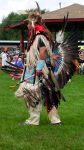
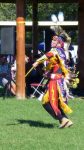
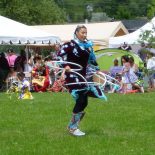
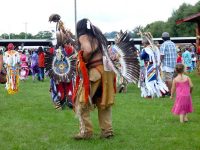
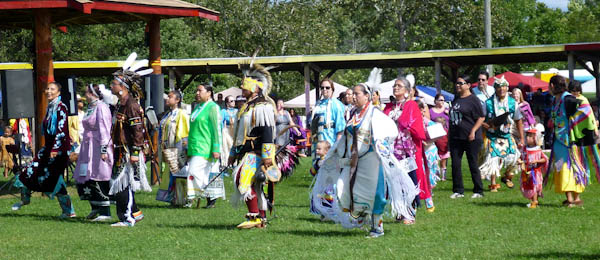
Set against the awareness of still untamed demons, Wikwemikong’s Cultural Pow Wow brought a wonderful sense of the renewal of connections to the traditional ways and of community. I found it fascinating, moving and full of hope. It was a revelation to begin to understand how many things we now tend to think of as created for tourism fit into traditional culture; to see beads and beautiful, soft, animal skins and furs being traded, as well as finished moccasins (I’m wearing a pair as I write), jewellery and more.


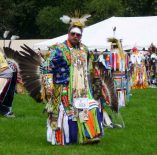
Pow Wow costumes range from very traditional, sometimes ancient and laden with cultural significance, to much more modern, using an intriguing range of contemporary materials. Most are truly awesome creations, made lovingly and worn with pride. Cultural Pow Wow’s involve ceremony, a range of dancing competitions, as well as times when everyone can join in and dance. They are, as they have always been, a time of gathering, when tribes come together from far and wide, to celebrate, to trade, to renew connections and make new ones. Outsiders are welcomed; but it is not always easy to understand when it is appropriate to take photos and when not, so we can only hope that we stayed respectfully within the boundaries.

Chi-migwetch, Wikwemikong!

Sadness mixed with hope – I guess, in truth, that is about the best I could have expected at this moment in time. It seems to me that we are reaching a tipping point in Canadian history. There is a deep need for modern Canada to acknowledge and own the shame of the near eradication of indigenous culture, the human impact of this and the immense loss it represents. The stories must be told and heard. But beyond the speaking and the listening, this is a time to begin to build new relationships, based on respect, that value the differences in cultural tradition and wisdom. It is time for Canada to begin the shift to a coherent, adult identity that marks its coming of age.

(You can click on any image to see larger versions of all the images on the page and there are more photos from our time in Manitoulin in our gallery – Summer Trip 2013)

A Christmas Card from Quebec City

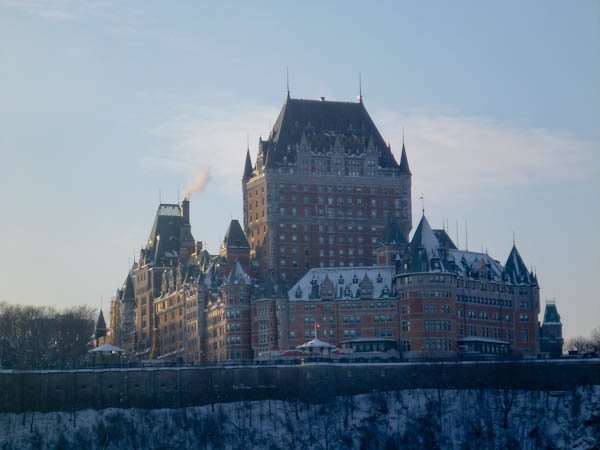
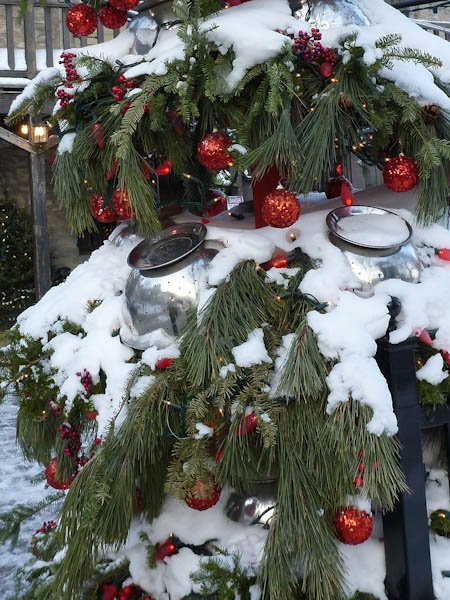
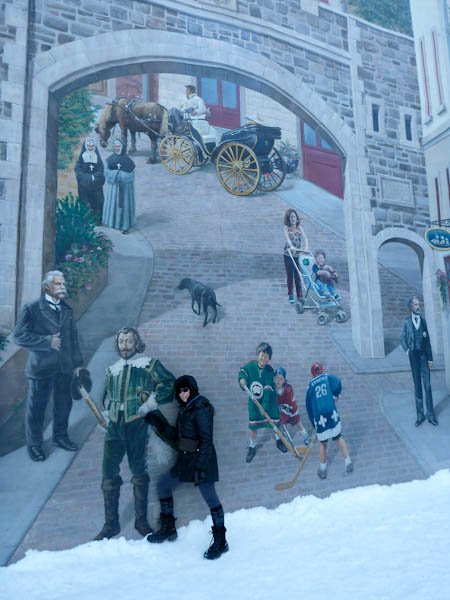
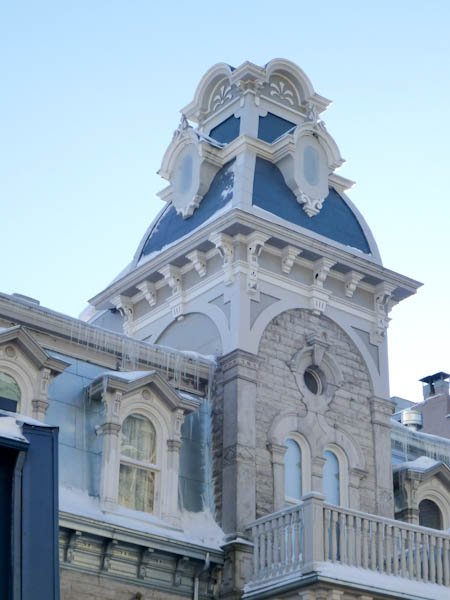
Fairy tale castles and ice; quaint houses from the seventeenth century and city walls; seasonal decorations – from traditional ribbon and foliage to a very creative use of shiny colanders – and a magical festival of lights; ‘bols’ of coffee and hot chocolate, patisserie to die for (or from!) and wonderful ‘boreal’ food, both traditional and modern; and, above all, a gloriously festive feel.


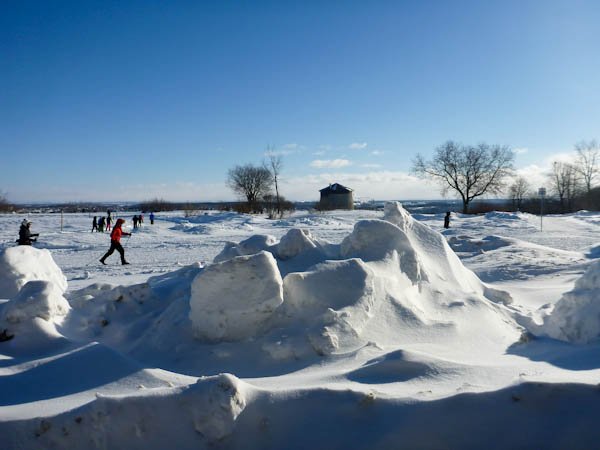
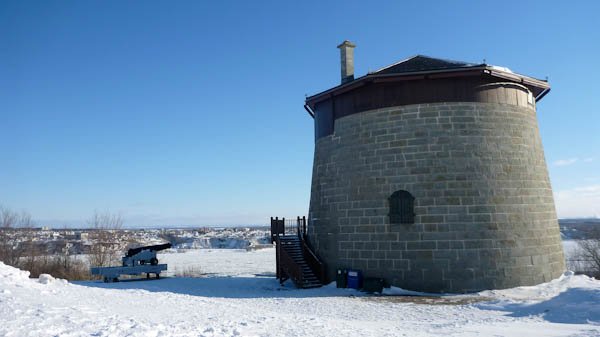
Although it was -27C on Christmas Day, the sun was shining and we must have walked over 8km through thesnow on the Plains of Abraham before a short skate a Place Youville, just outside the old city walls.

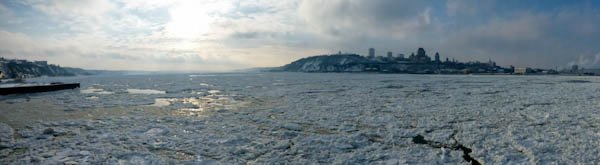
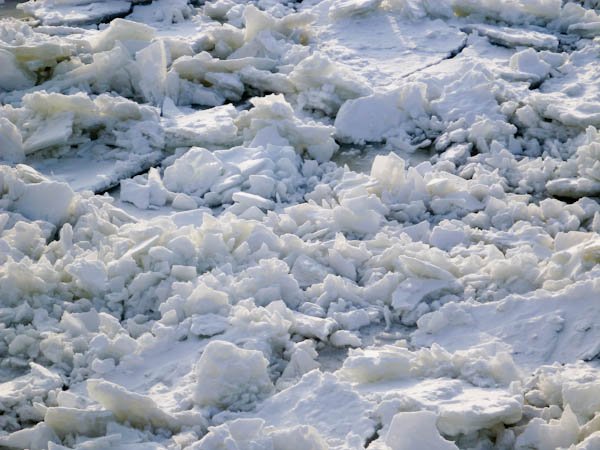
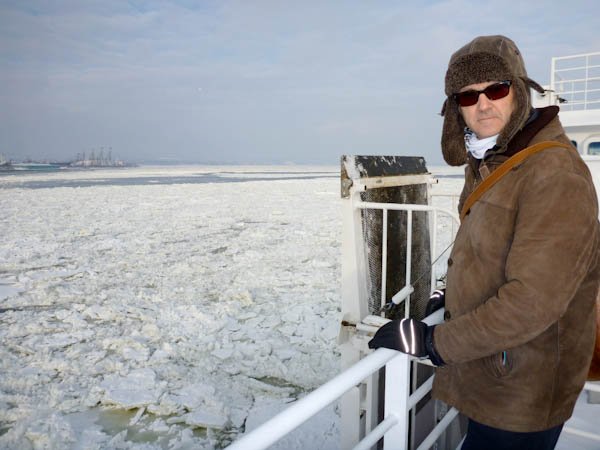
A definite highlight was the return trip on the ferry across the St. Lawrence to Levis, something a friend had suggested as offering wonderful views of Quebec City, which it did. But even more amazing to us was the experience of cutting through the ice, watching and hearing it crack – mesmerizing and meditative. It also amused us to see two ice canoe teams out practising for the winter carnival competition – only in Canada!


http://youtu.be/HIKHSpkD-l0

We also loved an innovative interactive journey through time at the Maison historique Chevalier and re-cap of the military history of the City at Le Musée du Fort using model soldiers and battleships, complete with sound, light and miniature explosions. After five hours at Les Musées de la Civilisation we were ‘museumed out’, but had played our way through the history of computer games, discovered Quebec artist Pierre Gauvreau, immersed ourselves in what it means to be aboriginal in the 21st century and more.

But for us, one of the real joys of any city visit is simply to wander, to notice the quirkiness and contradictions, to find small back-street restaurants and cafés.


Quebec City will be hard to beat for an urban white Christmas!