Monthly Archives: January 2014

A Christmas Card from Quebec City

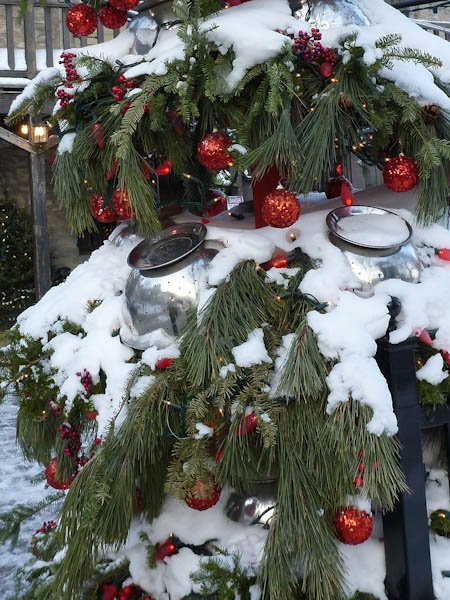
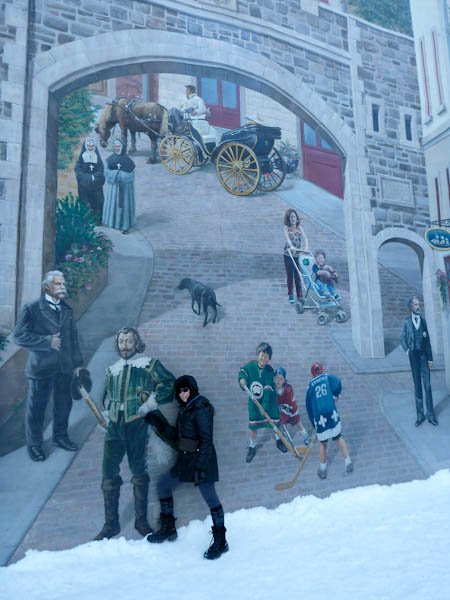
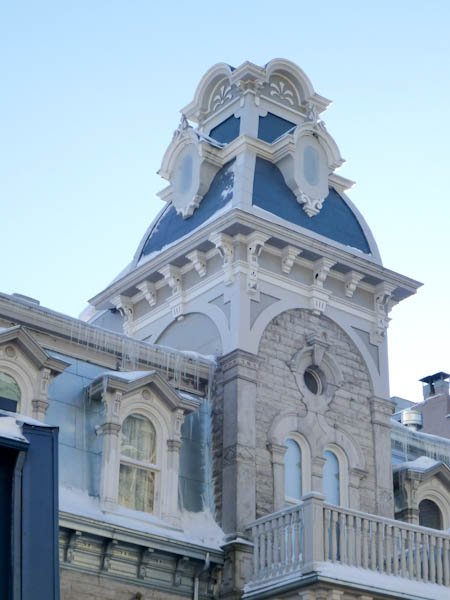
Fairy tale castles and ice; quaint houses from the seventeenth century and city walls; seasonal decorations – from traditional ribbon and foliage to a very creative use of shiny colanders – and a magical festival of lights; ‘bols’ of coffee and hot chocolate, patisserie to die for (or from!) and wonderful ‘boreal’ food, both traditional and modern; and, above all, a gloriously festive feel.


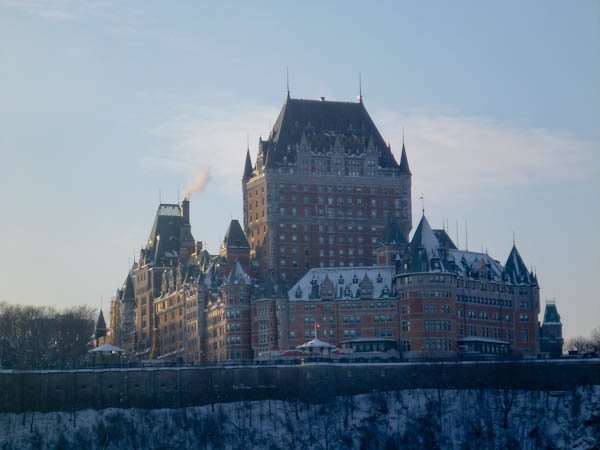
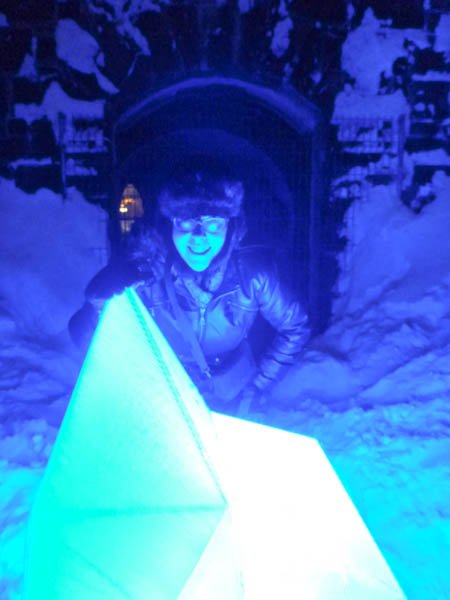
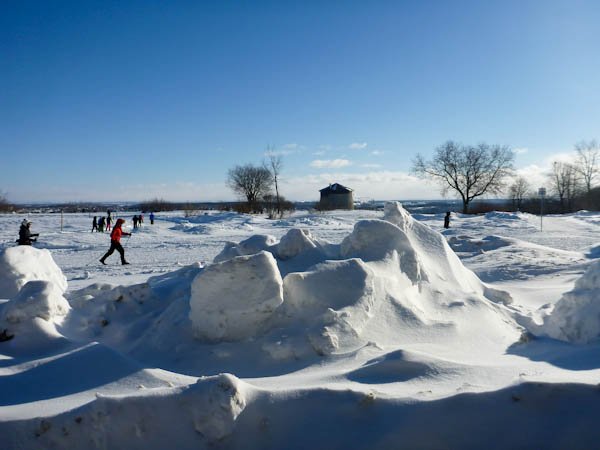
Although it was -27C on Christmas Day, the sun was shining and we must have walked over 8km through thesnow on the Plains of Abraham before a short skate a Place Youville, just outside the old city walls.
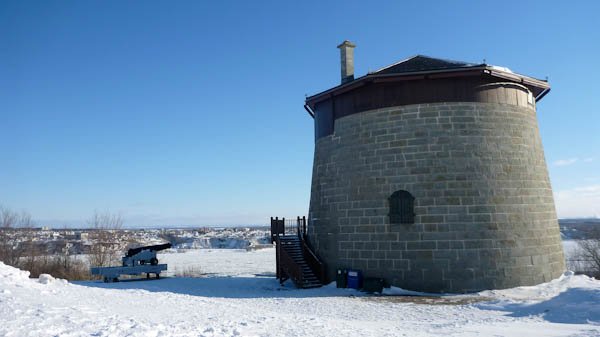
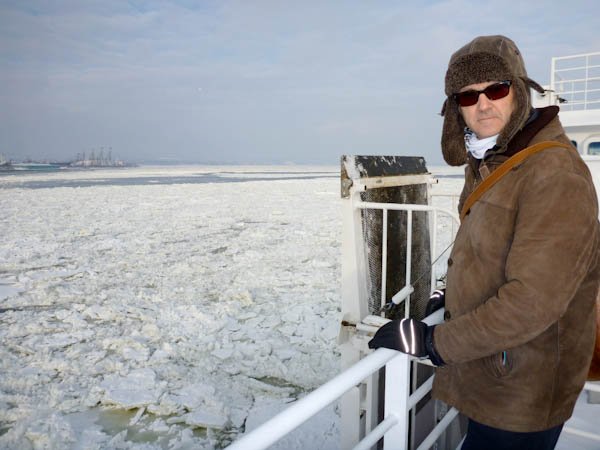
A definite highlight was the return trip on the ferry across the St. Lawrence to Levis, something a friend had suggested as offering wonderful views of Quebec City, which it did. But even more amazing to us was the experience of cutting through the ice, watching and hearing it crack – mesmerizing and meditative. It also amused us to see two ice canoe teams out practising for the winter carnival competition – only in Canada!
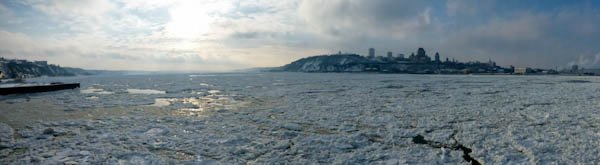

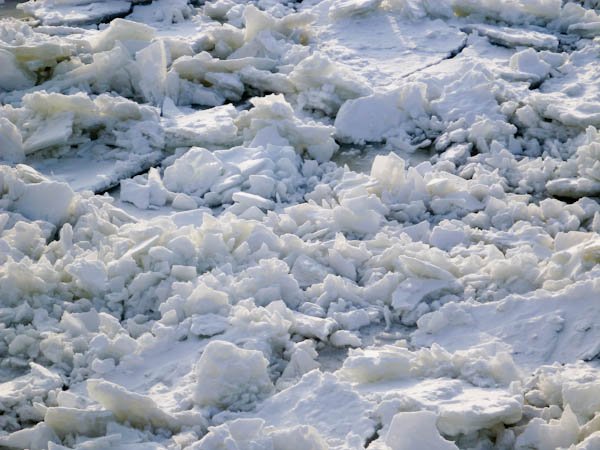
http://youtu.be/HIKHSpkD-l0

We also loved an innovative interactive journey through time at the Maison historique Chevalier and re-cap of the military history of the City at Le Musée du Fort using model soldiers and battleships, complete with sound, light and miniature explosions. After five hours at Les Musées de la Civilisation we were ‘museumed out’, but had played our way through the history of computer games, discovered Quebec artist Pierre Gauvreau, immersed ourselves in what it means to be aboriginal in the 21st century and more.

But for us, one of the real joys of any city visit is simply to wander, to notice the quirkiness and contradictions, to find small back-street restaurants and cafés.


Quebec City will be hard to beat for an urban white Christmas!

Ice Ice Baby – Toronto Ice Storm 2013

Beauty and brutality . . .

It just looks as if it is raining – as Brits, we know ‘cold, wet and miserable’!

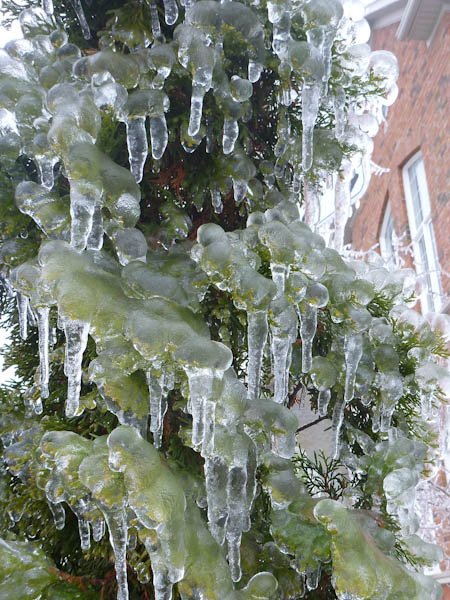
But this is rain that freezes on contact, ‘accretes’ on branches and leaves, on Christmas lights and baubles, on roads and side-walks, on cars, on road-signs . . . . on anything it touches.

At first it is just a fine layer, but the layers build and build until all is encased in crystal.


Eventually, the rain stops. If you venture out, safely clad with ice-grippers, there is a magical beauty, everything robed in clear ice that can be three or four centimetres thick. As the breeze shifts iced-branches, they sing an unearthly song, though for anyone who knows, there is a frisson of fear. When branches are weighed down like this, there is a risk that they will simply shear off.


Many areas of Toronto looked like a war-zone. We have lost around 20% of our urban tree canopy. Falling branches mean electrical wires torn loose. Over 300,000 homes were without power for anything from a few hours to over a week through Christmas and even into the New Year. Our power flickered through Saturday night and was gone by 6 a.m. on Sunday. It came back on at 8.30 a.m. on Tuesday, two hours after we left for Christmas in Quebec City. It is estimated that the clear-up will take two months and cost $75 million.

The pragmatism of Toronto’s people has been awesome, as well as the outpouring of mutual support. I can’t speak highly enough of the efforts of Hydro (Electricity Supply Board) workers from all over the country who put aside their own family Christmas celebrations to help. A priest I know spoke of a Hydro worker who positively glowed with the pleasure of restoring power to a church on Christmas Eve.

The last major ice-storm to affect Toronto was in 1998. I was mesmerized by the beauty inherent in the experience of an ice storm, but my heart goes out to all those significantly affected by it and I am heartily glad that past records suggest that we shouldn’t have another one too soon!

 See all our ice storm photos in our gallery!

Summer Reflections 2: Spirit Island

The largest freshwater island in the world, Manitoulin is considered sacred by the People of the Three Fires, the Ojibwe, the Odawa and the Potawatomi. It has been inhabited for at least 12,000 years and possibly for as long as 30,000. We found it restorative and fascinating, though not a place we could live. It seems to exist in that difficult space in which you have to be born there to be truly of it, yet if you are born there, you may well have to leave to make a life!

Looking out over Mudge Bay from our cottage, the language of legend seemed to seep through me – I saw the wind striding from Killarney across the depths of Georgian Bay towards us, a huge being, throwing down his shadow-cloak as he passed. It is easy here to sit and watch for hours as the light and water shift. It is a place to be still, surrounded by the noisy peace of woodpeckers, blue jays and the constantly changing rhythm of wind and water.


Highlights that remain with me (in addition to Wikwemikong and the cultural Pow-Wow there, which merit a post of their own), include Kagawong’s bridal falls –  much-visited, but still magic; kayaking up river above the falls, existing outside time in the flow; and, to the south west of the island on Huron’s shores, the sweep of Dominion and Carter’s Bays, sand dunes and scrub offering up an ancient, solitary beauty.

For more photos, see our Gallery (Summer Trip 2013)!